
Care Guides for Petra Croton

Every 7d
Recommended Frequency

1 /2 cup of water
Recommended Amount
Caring for a Petra Croton involves understanding its watering needs. Typically, watering every 3-5 days is sufficient, depending on the environment's humidity and temperature. Each watering session should involve approxi...


Every 14d
Recommended Frequency
Caring for a Petra Croton involves understanding its fertilization needs to ensure vibrant growth and leaf coloration. During the growing seasons of spring and summer, it is recommended to fertilize your Petra Croton eve...


Direct Sun
Recommended
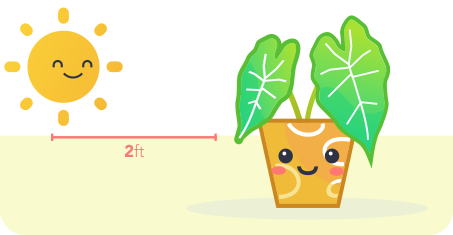
The Petra Croton thrives in bright direct sunlight, making it ideal for placement in front of or within 2-3 feet from a southern or western-facing window. This positioning allows the plant to be directly exposed to the s...

Every 1095d
Recommended Frequency
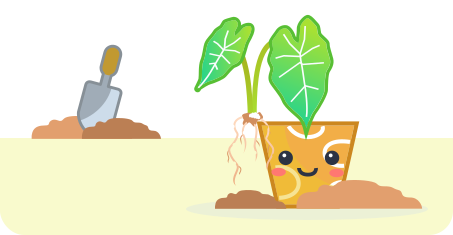
As a professional botanist, I'd like to share some essential tips on repotting your Petra Croton, a vibrant and eye-catching plant that requires specific care to thrive. Repotting is a crucial aspect of its care routine,...
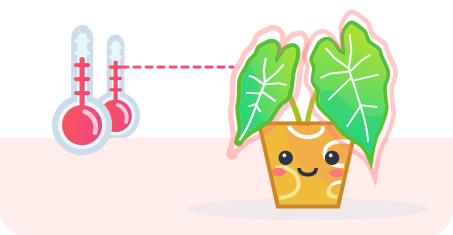
Caring for a Petra Croton involves understanding its specific temperature needs to ensure its health and vibrant colors. Ideally, this plant thrives in a temperature range between 75 to 85 degrees Fahrenheit. This range ...

Recommended Soil
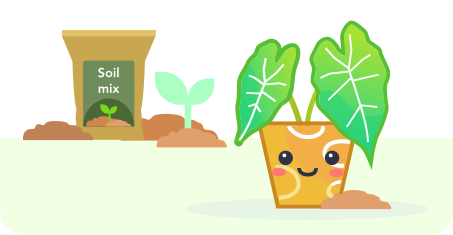
For Petra Croton, the recommended soil type is loamy soil. This soil is well-draining and fertile, making it ideal for supporting the growth and health of your Petra Croton. Loamy soil is a balanced mix of sand, silt, an...
Caring for a Petra Croton involves understanding its specific needs, especially regarding humidity. This vibrant plant thrives in environments where the humidity ranges from 40% to 80%, averaging around 60%. This level o...

 See full care guide

Questions about Petra Croton

Common Pests and Diseases
Root Rot
Overwatering
To address root rot, start by reducing your watering frequency; Petra Crotons require the soil to dry out partially between waterings. If the plant is already affected, remove it from its pot, trim away any black, mushy roots, then repot in fresh, well-draining soil. Ensure the pot has adequate drainage holes. Moving forward, use your finger to check the soil's moisture level before watering, ensuring the top inch is dry.

Use Plant Doctor in the app to diagnose a disease:


Leaf Drop
Underwatering
To address leaf drop caused by underwatering in Petra Croton, ensure the plant is watered deeply and consistently, allowing the top inch of soil to dry out between waterings. Use a well-draining soil mix to prevent waterlogging. If the plant has been severely underwatered, immerse the pot in a water bath for a few minutes to rehydrate the soil thoroughly. Regular monitoring and adjusting your watering schedule according to the season will help prevent future occurrences.
Spider Mite Infestation
Spider mites are tiny pests that thrive in warm, dry conditions. They feed on the sap of Petra Croton plants, causing yellowing, speckled leaves, and overall plant stress.
To combat spider mites, increase humidity around your Petra Croton by misting the plant regularly or using a humidifier. Wash the plant gently with soapy water or an insecticidal soap to remove and kill the mites. For severe infestations, applying neem oil or a miticide specifically designed for spider mites can be effective. Ensure to isolate the affected plant to prevent the spread to other houseplants.
Leaf Spot Disease
Fungal or bacterial pathogens
To manage leaf spot disease, it's crucial to maintain a clean environment around your Petra Croton. Remove and dispose of any infected leaves to prevent the spread of the disease. Improve air circulation around the plant to reduce humidity levels, which can exacerbate the problem. If the infection is severe, applying a fungicide or bactericide, as appropriate, following the manufacturer's instructions, can help control the disease. Always ensure your pruning tools are sterilized to avoid spreading pathogens.

Related Plants


